| For Authors |
Author Guidelines
Manuscript Preparation Guidelines
Manuscripts submitted to the Journal of Literature Education and Cultural Studies (JOLECS) must be written in English and prepared using the official JOLECS Manuscript Template. Manuscripts that do not follow the journal formatting requirements may be returned to the authors before entering the peer-review process.
The manuscript must be prepared in Microsoft Word (.doc or .docx) format using A4 paper size, Times New Roman font, 12-point font size for the main text, and single line spacing. The manuscript should be written in a single-column format and should present original research or scholarly review with significant contributions to the fields of literature education, literary studies, and cultural studies.
The manuscript should be organized in the following order:
- TITLE
The title should be concise, informative, and accurately reflect the content of the manuscript. It should not exceed 15 words and should avoid abbreviations whenever possible. The title must be written using Times New Roman, 14 pt, bold.
- AUTHOR(s)
The manuscript should include:
- Full name(s) of the author(s) without academic titles;
- Institutional affiliation (Department, Faculty, Institution, City, Country);
- Corresponding author's email address;
- ORCID iD is recommended for all authors.
- ABSTRACT
The abstract should consist of 150–250 words written in one paragraph. It should briefly describe:
- Background of the study;
- Research objectives;
- Research methods;
- Main findings;
The abstract should not contain citations, figures, tables, or unexplained abbreviations.
Provide 3–5 keywords immediately after the abstract. Keywords should be separated by semicolons and arranged alphabetically whenever possible.
- INTRODUCTION (12 pt)
The introduction must contain (in sequence) a general background, a state of the art as a basis for statements of scientific novelty from articles, statements of scientific novelty, and research problems or hypotheses. At the end of the introduction, the purpose of the article review must be written. In the format of scientific articles, the literature review is not permitted as in the research report but is manifested in the form of a state of the art study to show the scientific novelty of the article.
- METHOD (12 pt)
The flow of research should be presented in this section complete with captions. Image captions placed as part of the image title (figure caption) are not part of the picture. The methods used in completing the study are written in this section.
- RESULTS AND DISCUSSION (12 pt)
The results and discussion contain scientific research findings and discussions. Write down scientific findings obtained from the results of research that has been done but must be supported by adequate data. The scientific findings referred to here are not the results of the research data obtained. The scientific findings must be explained scientifically including: What scientific findings were obtained? Why did that happen? Why are trend variables like that? All these questions must be explained scientifically, not only descriptive if necessary supported by adequate scientific basis phenomena.
When the author(s) needs to present tables or figures, please see Table 1 and Figure 1.
Table 1
Frequency distribution
|
No. |
Interval |
Frequency |
% |
Category |
|
1. |
85 – 100 |
59 |
28.36 |
Very Good |
|
2. |
75 – 84 |
93 |
44.71 |
Good |
|
3. |
65 – 74 |
37 |
17.78 |
Fair |
|
4. |
55 – 65 |
19 |
09.15 |
Bad |
|
Total |
208 |
100.00 |
||
(Place the titles of the figures after the figures and tables preceding them using Times New Roman font size 10 for the title.)
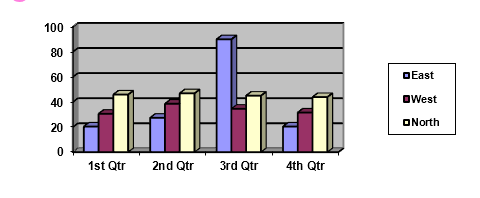
Figure 1. Number of subtheme published in JOLECS
(Source: …)
- CONCLUSION (12 pt)
The conclusion describes the answer to the hypothesis and / or the purpose of the research or scientific findings obtained. Conclusions do not contain repetitions of the results and discussion, but rather summarize the findings as expected in the objectives or hypotheses.
- RECOMMENDATION (12 pt)
Recommendations describe things that will be done related to the next idea of the research. Barriers or problems that can influence the results of the research are also presented in this section.
- ACKNOWLEDGMENT (12 pt)
This section can be written in case there are certain parties that need to be acknowledged, such as research sponsors. The acknowledgment must be written in brief and clear. In addition, avoid hyperbole acknowledgment.
- REFERENCES (12 pt)
All references referred to in the text of the article must be registered in the References section. The bibliography must hyperbolic acknowledge ies originating from primary sources (scientific journals and amounting to a minimum of 80% of the total bibliography) published in the last 5 (five) years. Each article contains at least 25-30 references. Writing a referral system in an article text and writing a bibliography should use a reference management application program, for example, Mendeley, EndNote, or Zotero, or others.
- Guide to Writing References
Writing references should use reference management applications such as Mendeley, EndNote, Zotero, or others. The format of writing used in the e-Saintika is in accordance with the format of the APA (American Psychological Association).
Journal articles: Bekker, J. G., Craig, I. K., & Pistorius, P. C. (1999). Modeling and Simulation of Arc Furnace Process. ISIJ International, 39(1), 23–32.
Book: Fridman, A. (2008). Plasma Chemistry. Cambridge: Cambridge University Press
Articles in proceedings: Roeva, O. (2012). Real-World Applications of Genetic Algorithm. In International Conference on Chemical and Material Engineering (pp. 25–30). Semarang, Indonesia: Department of Chemical Engineering, Diponegoro University .
Thesis and dissertation, research reports: Istadi, I. (2006). Development of A Hybrid Artificial Neural Network – Genetic Algorithm for Modelling and Optimization of Dielectric-Barrier Discharge Plasma Reactor. PhD Thesis. Universiti Teknologi Malaysia.
Chapter in an edited book: Hovmand, S. (1995). Fluidized Bed Drying. In Mujumdar, A.S. (Ed.) Handbook of Industrial Drying (pp.195-248). 2nd Ed. New York: Marcel Dekker.
Website: United Arab Emirates architecture. (n.d.). Retrieved June 17, 2010, from UAE Interact website: http://www. uaeinteract.com/
Articles from the websites: Benton Foundation. (1998, July 7). Barriers to closing the gap. In Losing ground bit by bit: Low-income communities in the information age (chap. 2). Retrieved from http://www.benton.org/library?low-Income/two.html
Copyright
Authors who publish their manuscripts in the Journal of Literature Education and Cultural Studies (JOLECS) agree to the following terms:
- Copyright Ownership: Copyright of all published articles remains with the author(s). Upon acceptance for publication, the author(s) grant JOLECS the right of first publication and a non-exclusive license to publish, distribute, archive, and disseminate the article.
- Open Access License: All articles published in JOLECS are licensed under the Creative Commons Attribution-ShareAlike 4.0 International (CC BY-SA 4.0) License. This license permits anyone to copy, distribute, adapt, and build upon the published work for any lawful purpose, provided appropriate credit is given to the original author(s) and the Journal of Literature Education and Cultural Studies (JOLECS), and any derivative works are distributed under the same license.
- Author Rights: Authors are permitted to enter into separate, non-exclusive agreements for the distribution of the published version of their articles (for example, depositing the article in an institutional repository, personal website, or publishing it as part of a book), provided that the original publication in JOLECS is properly acknowledged.
- Self-Archiving Policy: Authors are encouraged to share the submitted, accepted, or published versions of their manuscripts through institutional repositories, personal websites, academic social networks, or other non-commercial platforms to increase the visibility and impact of their research, while clearly acknowledging JOLECS as the original place of publication.
This work is licensed under a Creative Commons Attribution-ShareAlike 4.0 International License.
Privacy Statement
The names, affiliations, ORCID iDs, and email addresses entered in the Journal of Literature Education and Cultural Studies (JOLECS) website will be used exclusively for editorial and publication purposes. This information will not be shared, sold, or made available to any third party except as necessary to facilitate the editorial process, indexing services, or publication requirements.
JOLECS is committed to protecting the privacy and confidentiality of authors, reviewers, editors, and readers in accordance with internationally accepted standards of scholarly publishing.